


When and Where Is Mesh Decking Mandatory?
0%
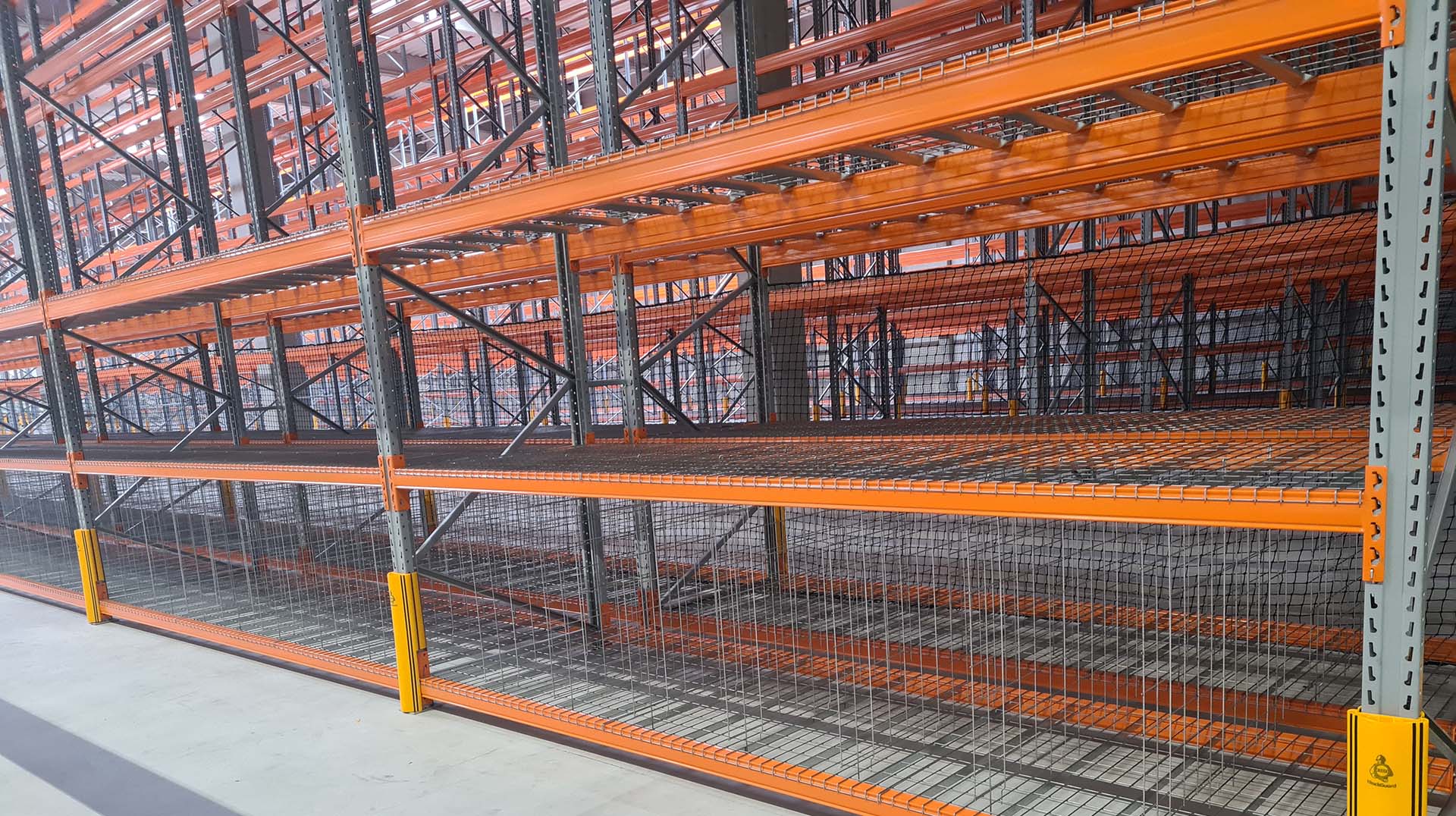
Please note: this article discusses Dutch legislation and standards (ARBO and the Bouwbesluit). The information below applies to the Dutch situation and may not be directly applicable in other countries.
Many warehouses use accessories in pallet racking that provide extra support for pallets or other goods. These can be decking panels, mesh decking, press-formed decking or depth supports. These accessories not only help support the pallet, but are also mandatory in many locations.
In this article we provide an overview of the situations in which mesh decking is mandatory or strongly recommended from an ARBO perspective. In general terms: mesh decking not only provides extra support, but also acts as fall-through protection in any location where employees may be present underneath stored pallets.
Decking above underpasses (tunnels) in pallet racking
Many larger warehouses with long rows of pallet racking include underpasses, so that operators don't have to drive all the way back to the front of the warehouse to switch aisles. This improves efficiency, but also carries risks.
Underpasses must meet the following requirements:
- The construction must be approved by the manufacturer. Higher beam levels increase the buckling length of the frame, and the frame must be calculated to account for this.
- The underpass must be protected with frame protectors on both sides.
- The first beam level above the passage must be fitted with fall-through protection, such as mesh decking or decking panels.
Decking above emergency exits in racking
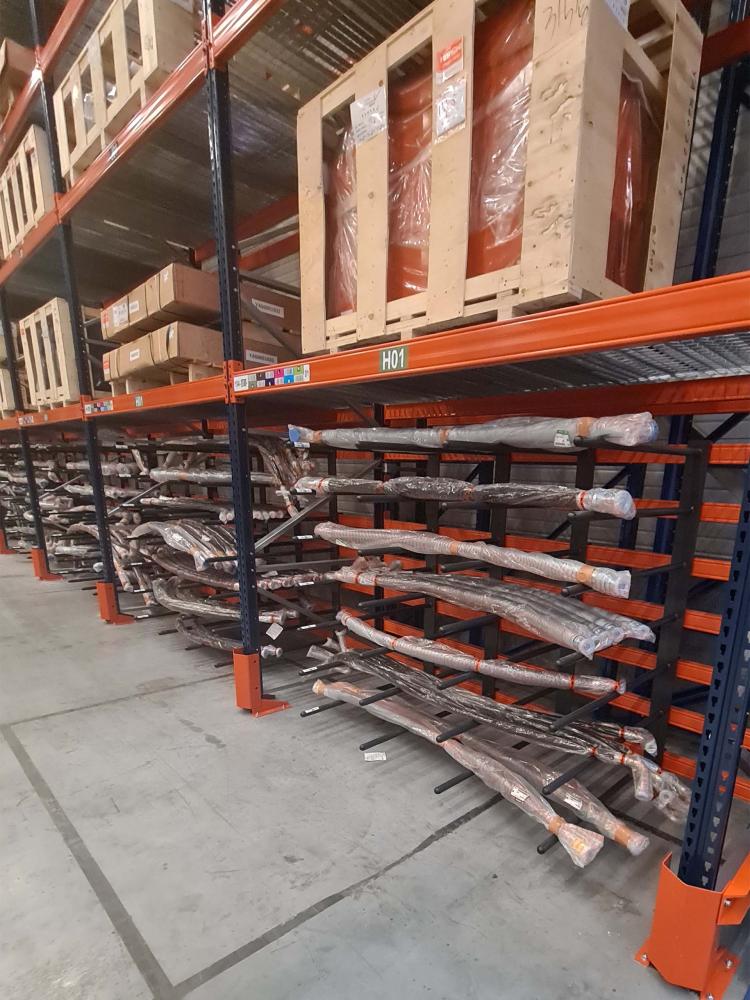
An often-overlooked application is at emergency exits (or walk-through doors in general) around which racking has been built. Racking is regularly placed along walls, while emergency exits are also located there.
Pay attention to the following points here:
- The first beam must be positioned higher than 2300 mm, so that the minimum clearance height required under the Bouwbesluit is maintained.
- Emergency exit signage must remain visible. Emergency lighting often needs to be relocated to the aisle side.
- The first beam level above the emergency exit must be fitted with fall-through protection.

Mesh decking above fire hose reels, extinguishers and connection points
In warehouses, columns are often used to mount fire extinguishers, fire hose reels, power points and network connections. These are critical facilities that must always remain safely accessible.
When racking has been placed around these columns, the levels above must be fitted with mesh decking to prevent goods from falling through.
Decking above order-picking levels
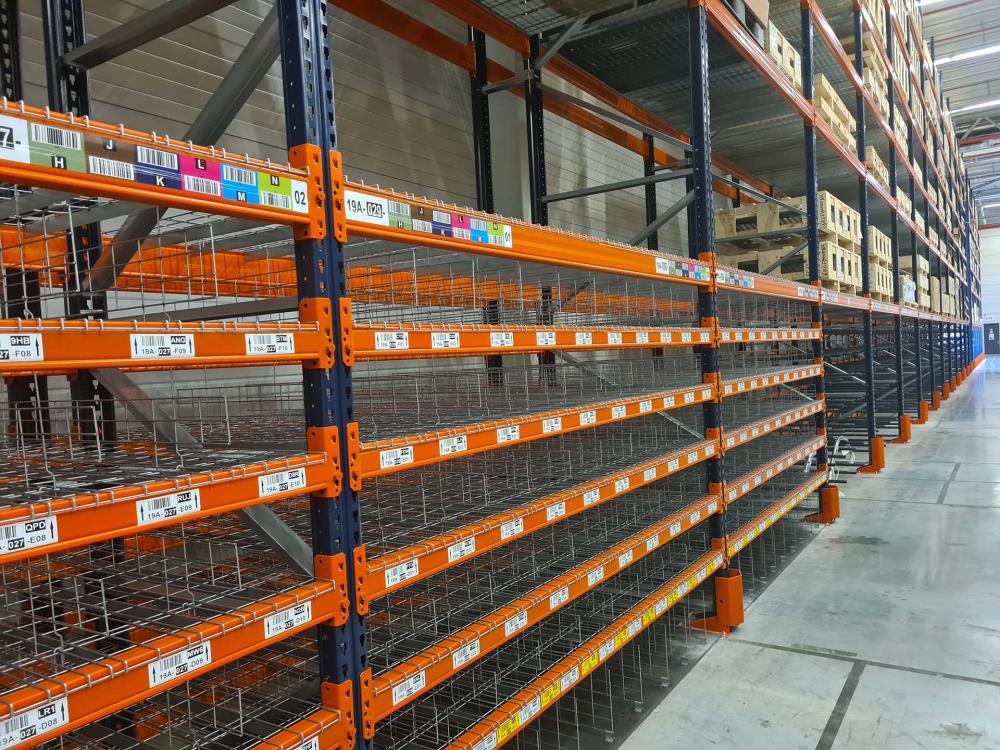
The use of decking or decking panels at order-picking levels is self-evident. This is where loose goods are stored that would otherwise not be stable.
What is often forgotten is that the first beam level above order-picking locations must also be fitted with fall-through protection. After all, during order picking an employee is (partly) positioned underneath pallet storage.
This risk also applies when picking from ground level. When employees are present in the ground bay, the first level above it must always be fitted with decking or other fall-through protection.
Decking for non-standard pallet sizes
Most pallet racking in the Netherlands is 1100 mm deep, suitable for euro and block pallets of 1200 mm. These pallets are supported via the blocks resting on the beams.
For non-standard load carriers, such as half pallets, wire mesh boxes or steel bins, this support is often insufficient. In that case, additional provisions are needed, such as:
- Mesh decking
- Press-formed decking
- Decking panels
- Depth supports
- Trays
Applying mesh decking for non-standard loads requires insight into load distribution. The load is distributed differently across the beams, which affects the load-bearing capacity. More information on this will follow in a separate article.
Additional situations where decking is strongly recommended
- Above workstations or packing stations in the warehouse if they are placed 'inside' the pallet racking
- At locations with an increased risk of shifting loads (for example, with damaged pallets)
Summary
In many situations, mesh decking is not only a practical solution, but also an important safety measure. Wherever employees may be present underneath stored goods, the risk of falling through must be eliminated.
By applying decking in the right locations, you not only comply with guidelines and standards, but also ensure a demonstrably safer warehouse.


