


The PRSES and Its Relationship with ARBO, BBL, RI&E and NEN-EN 15625
0%
Please note: this article discusses Dutch legislation and standards (the Arbowet, RI&E and NEN-EN 15635). The information below applies to the Dutch situation and may not be directly applicable in other countries.
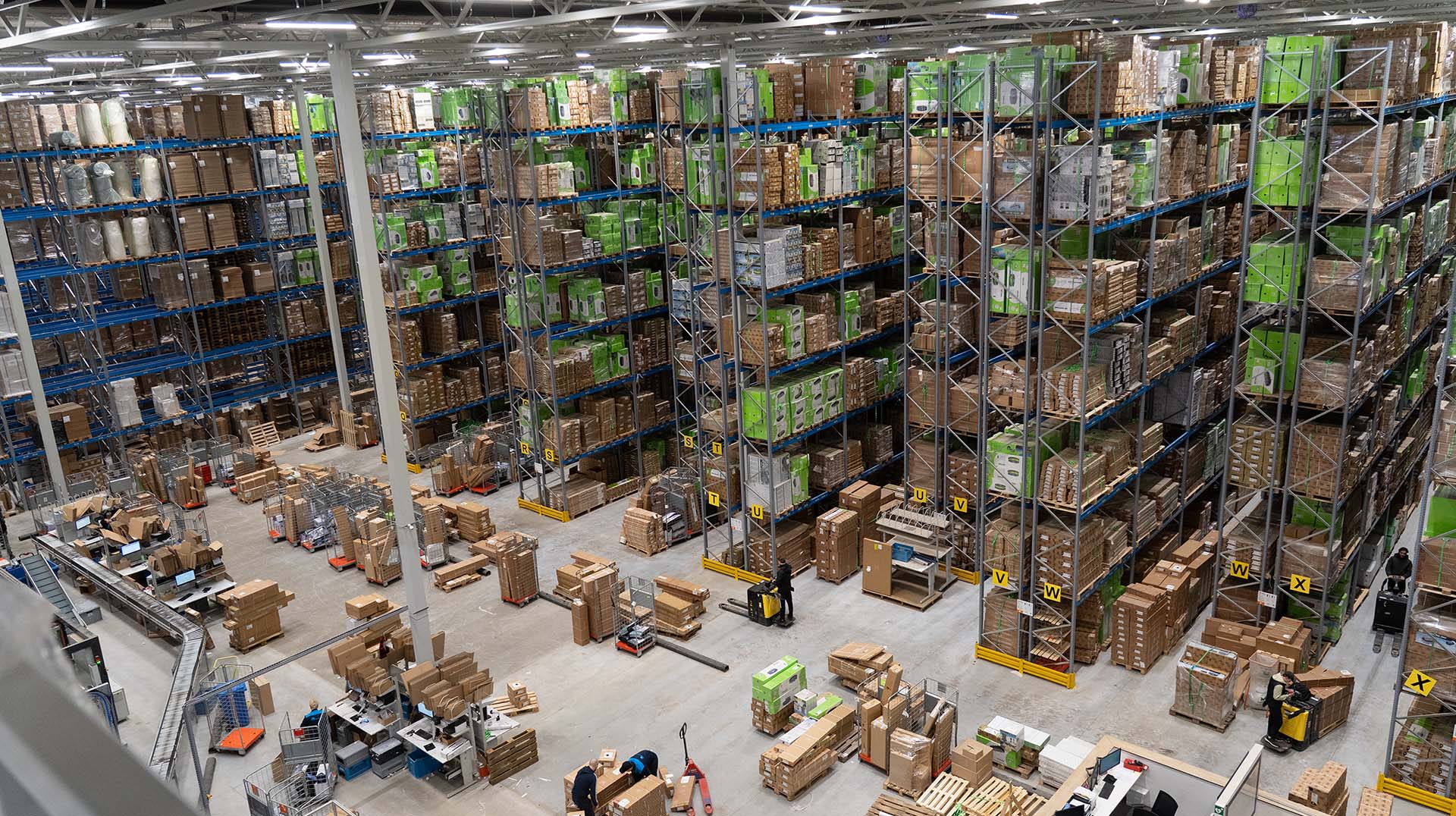
It's time we talked a bit more about the PRSES. You may be wondering what a PRSES actually is. In short: the person responsible for the safety of your warehouse racking. An important role. Not only because every employer values a safe working environment for their staff, but also because the government sets requirements for how your warehouse is laid out - both from the ARBO side and from the side of structural safety in the Bbl (Buildings Decree). To provide more insight into the role and tasks of the PRSES, we are writing a number of articles on this topic.
The first part below covers the role of the PRSES and its relationship with ARBO, RI&E and NEN-EN 15635.
Introduction
In warehouses and logistics environments, storage systems such as pallet racking form an essential part of operations. At the same time, these systems carry significant safety risks, such as the danger of collapse, falling loads and injury caused by collisions with internal transport equipment. To manage these risks, the European standard NEN-EN 15635 was drawn up.
Within this standard, the PRSES plays a central role. PRSES stands for Person Responsible for Storage Equipment Safety. This officer oversees the safe condition, correct use, and follow-up of inspection and repair measures relating to storage systems.
NEN-EN 15635: purpose and scope
The NEN-EN 15635 standard relates to the safe use and maintenance of static steel storage systems. Among other things, the standard describes how organizations should deal with:
- inspection of racking and storage structures;
- identification and assessment of damage;
- measures in unsafe situations;
- responsibilities for management and oversight;
- periodic checks and documentation.
The purpose of the standard is to prevent incidents resulting from damage, overloading, incorrect use or inadequate maintenance of storage equipment.
The PRSES: definition and positioning
Within the organization, the PRSES is the designated person responsible for the safety of storage equipment and storage systems. This role must be clearly assigned, so that oversight, assessment and follow-up do not become fragmented across multiple departments without clear ownership.
Core responsibilities of the PRSES
- Oversight of inspections
The PRSES ensures that inspections are carried out at the right frequency and by competent persons. A distinction can be made here between daily visual checks, periodic internal inspections and expert annual inspections. - Assessment of damage
Damage to uprights, beams, collision protection and other load-bearing parts must be assessed for severity and risk. This is usually done using classifications such as green, orange and red. - Coordination of repair measures
When damage is identified, the PRSES determines or oversees which measures are needed, such as repair, replacement or the temporary decommissioning of a racking bay. - Documentation and registration
The PRSES ensures that inspection results, damage records, repair actions and clearances are properly recorded. This registration is essential for traceability and demonstrable risk control. - Communication and instruction
The PRSES plays an important role in informing employees about the safe use of storage equipment, reporting procedures and recognizing unsafe situations.
The PRSES is therefore not only a technical point of contact, but also an organizational linchpin between the shop floor, management, maintenance and prevention.

Relationship with the Arbowet
The Dutch Working Conditions Act (Arbeidsomstandighedenwet, Arbowet) requires employers to provide a safe and healthy working environment. Among other things, this means that risks must be prevented or, where full prevention is not possible, limited to an acceptable minimum. Pallet racking is regarded as work equipment. This brings it directly within the scope of ARBO legislation. Article 7.4a of the Working Conditions Decree (Arbeidsomstandighedenbesluit) addresses the inspection of work equipment.
Although the job title PRSES does not literally appear in the Arbowet, the role directly aligns with the employer's statutory duty of care. In practice, the PRSES gives substance to that duty of care for everything related to storage installations and racking safety.
Link with the Arbowet
- Employer's duty of care: the employer must demonstrably take measures to prevent accidents.
- Preventing occupational risks: the PRSES helps to systematically identify and manage risks.
- Instruction and supervision: employees must be adequately instructed on working safely.
- Management of work equipment and workplaces: racking and storage facilities must remain safe to use.
From a legal and organizational perspective, the PRSES can therefore be seen as a practical translation of existing ARBO obligations into the specific context of internal logistics and storage.
Relationship with the RI&E
Every employer in the Netherlands is required to draw up an RI&E: the Risk Inventory & Evaluation (Risico-Inventarisatie & -Evaluatie). This identifies and assesses occupational risks within the organization, followed by a plan of action.
In warehouses and distribution centers, storage systems are an important RI&E topic. Consider risks such as:
- collision damage caused by forklifts or reach trucks;
- deformation of load-bearing structural components;
- collapse of racking;
- falling pallets or loose goods;
- incorrectly loaded or misused storage locations.
The PRSES's contribution to the RI&E
The PRSES makes an important substantive contribution to the RI&E at various stages:
- identifying technical and organizational risks around storage systems;
- providing inspection data and incident information;
- assessing the effectiveness of control measures;
- advising on improvement measures in the plan of action;
- safeguarding follow-up and periodic reassessment.
In doing so, the PRSES supports not only the risk inventory itself, but also the continuous improvement of safety management.
Relationship with general safety policy in the Netherlands
In practice, Dutch safety policy is based on a combination of statutory obligations, good employership, normative frameworks and a systematic approach to risk management. Many organizations work according to the Plan-Do-Check-Act cycle.
| Safety principle | Meaning for the PRSES |
|---|---|
| Plan | Providing input for safety policy, racking inspections, maintenance and RI&E measures. |
| Do | Organizing checks, instructions and the execution of corrective measures. |
| Check | Monitoring damage records, inspection results and compliance with usage rules. |
| Act | Implementing improvement measures and adjusting procedures or facilities. |
In that sense, the PRSES fits well within broader safety management systems, including approaches aligned with standards such as ISO 45001. The added value of the role lies in the fact that responsibilities are explicitly assigned and that safety information is actually converted into action.
Practical implementation in organizations
The effectiveness of the PRSES role depends on how it is embedded within the organization. A formal title alone is not enough; authority, resources and support must also be in place.
Important preconditions
- Formal appointment: the role must be explicitly assigned.
- Expertise: knowledge of racking, loads, damage criteria and relevant regulations is essential.
- Authority: the PRSES must be able to have measures taken in unsafe situations.
- Process assurance: inspection, reporting, repair and clearance must be part of standard work processes.
- Cooperation: coordination with the prevention officer, managers, technical services and external inspectors is essential.
In summary
The PRSES fulfills a key role in the safe management of storage systems in accordance with NEN-EN 15635. The function ensures that inspections, damage assessment, follow-up and documentation are structurally organized and not dependent on ad-hoc action.
Within the Dutch context, the PRSES directly aligns with the principles of the Arbowet, the obligations arising from the RI&E, and the general safety policy aimed at risk management and continuous improvement. Organizations that assign this role properly strengthen not only their compliance, but above all the actual safety of their employees and business assets.


